Welcome to ThreadLyne Global

Welcome to ThreadLyne Global
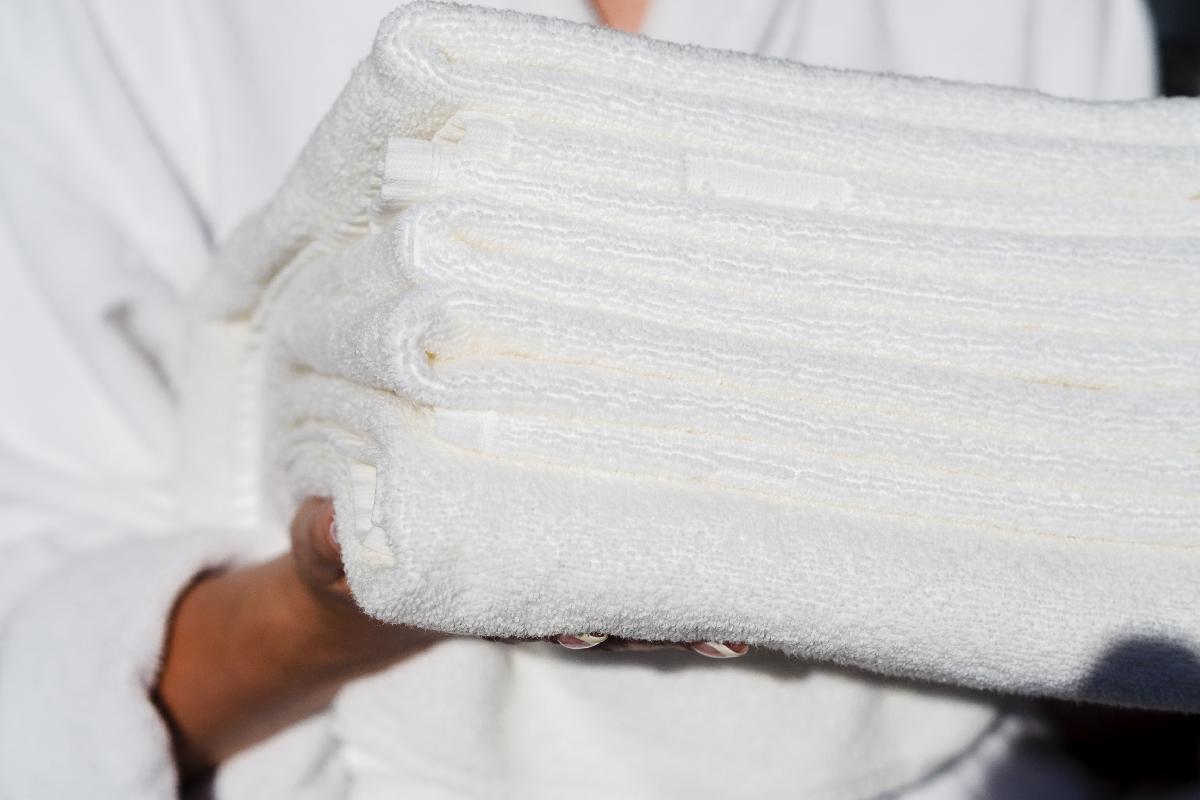
Towels are one of the highest turnover items in a hotel’s operations. A lot of properties replace them far more often than they actually should. The reason is not as simple as the quality was not good. It is a combination of how towels are bought, washed, dried, and stored. Getting it right can reduce the number of replacement cycles per year by as high as 20%.
In this article you will learn what to look for while purchasing towels and how to care for it so that they last longer than they currently are. Small changes in procurement and handling can help double the lifespan of your linens.
An average lifespan of a hotel towel is around 100-150 wash cycles. A lot of properties are averaging around 60-80 washes due to simple and avoidable mistakes. The three primary causes of premature wear are:
You might already know that GSM (Gram per Square Metre) of a towel is an important factor. But most people may not understand the true extent of its importance. We say that GSM matters more than the price per item. Here is why:
HIGHER GSM = MORE FIBRES = MORE WASH CYCLES BEFORE DEGRADATION
However good the quality of cotton you’re using, few fibres will degrade after each wash. Thus, a higher GSM towel will inadvertently have more fibres. This will ultimately result in your towel lasting longer. The extra softness at the beginning is an added benefit.
The quality of cotton is also a factor to keep an eye on. Combed and Ring-spun cotton fibres are tightly grouped together, whereas Open-ended and carded cotton are loosely bonded. Opting for combed ring-spun will result in lesser fibre loss over each wash cycle.
Loop construction is often overlooked by purchasers. A tighter loop density will reduce the softness slightly but will strengthen the structure of your towel significantly. It is important to balance the softness and strength of the fabric to suit your needs.
Reach out to us today to understand which towel will suit your needs the most.
Washing is the single biggest factor in towel lifespan. Making small but consistent mistakes can cause big problems in the long run. A lot of laundry operators ignore the wash care instructions on the label. If a towel suited for machine wash at 40°C is washed at above 60°C, it is bound to be damaged sooner.
The quality and quantity of detergent is also of utmost importance. More detergent doesn’t always mean cleaner towels. In most cases, more than needed detergent means more built-up residue. This results in stiffer towels and attracts more dirt over time.
Usage of highly concentrated chlorine bleach causes breakdown of cotton fibres rapidly. Instead of that, oxygen based whitening agents are gentler and effective for maintaining colour. Chlorine bleach should only be used in case of extreme dirt build up. Although avoiding it as much as possible is advisable.
Towels are heavy and need space to move around in the washing machine. Stuffing in too much in a cycle will not allow enough movement. The cleaning will not be good enough, needing you to wash them again. Also, avoid washing bed linen and towels in the same cycle. Both products have different weight. Washing them together may cause more mechanical stress.
The dryer causes more towel damage than most housekeeping teams realise. Over-drying is the main culprit. Leaving towels in the drum past the point of dryness breaks down cotton fibres and leaves them stiff. Remove towels while slightly damp and let residual heat finish the job.
Avoid ironing towels with direct high heat. It flattens terry loops permanently, destroying the softness and absorbency you paid for.
On fabric softener, use it sparingly, not every cycle. It coats fibres over time and reduces absorbency. A small amount of white vinegar in the rinse cycle is a better routine alternative. It removes detergent residue and restores softness without the coating effect.
Where possible, tumble dry rather than flat dry. In humid or poorly ventilated laundry rooms, flat-dried towels develop mildew, which then requires harsher washing to remove, accelerating wear further.
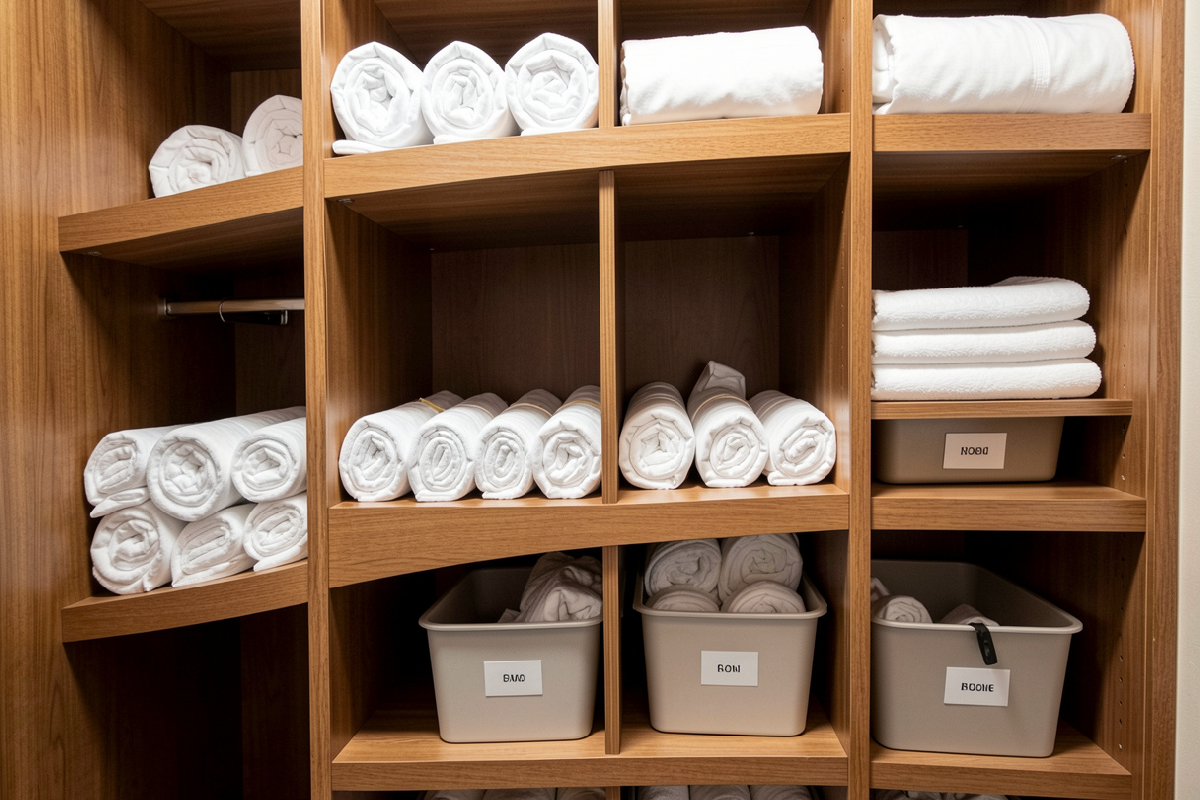
Good washing habits can be undone by poor storage. Linen rooms should be dry, ventilated, and temperature-consistent. Humidity weakens cotton fibres and causes mildew even in perfectly clean towels.
Stock rotation is the most overlooked issue. Without a FIFO system (first in, first out) some towels go through 200 wash cycles while others sit barely used. The result is uneven quality across rooms and unpredictable guest experiences. Clean towels returned from laundry go to the back of the shelf. Front stock gets used first.
Avoid tight stacking. The weight of a heavy pile compresses terry loops over time and reduces the loft that makes towels feel premium. Finally, pull damaged or stained towels immediately. A stained towel left in a clean pile is a problem waiting to surface during room turnover at the worst possible moment.
No towel lasts forever, and stretching one past its useful life costs more than replacing it. Guests notice, and one poor towel in an otherwise well-presented room leaves a lasting impression.
Retire a towel when it shows two or more of these signs: fabric thin enough to see light through, fraying edges, persistent staining or odour after washing, or visible loss of absorbency.
Don't discard retired towels immediately. Repurpose them as cleaning rags or utility linen first. This extends their value and gives housekeeping a supply of rags without additional spend.
For importers, retirement cycles are a reorder opportunity. A well-managed hotel retires towels every 18–24 months under good care conditions. Knowing your client's par level and occupancy rate lets you time that reorder conversation proactively.
Towel lifespan comes down to two decisions: what you buy and how you handle it. Hotels and importers that get both right replace their towel inventory significantly less often and deliver a more consistent guest experience without increasing their linen budget.
The fixes are rarely expensive. Better wash temperatures, looser stacking, a FIFO rotation system: these are operational habits, not major investments. The biggest returns come from buying the right GSM and cotton quality upfront, and then protecting that investment through every wash, dry, and storage cycle.
If you're sourcing towels for a hotel property or distributing to hospitality clients, the quality before the towel reaches the laundry room matters enormously. ThreadLyne's bath linen range is built for high-rotation hotel use. Request a quote and we'll match the right GSM and construction to your property's needs.

ThreadLyne Global is a trusted hospitality linen supplier, delivering premium bed linen and towels worldwide. We stand for comfort, quality, transparency, and on-time supply for hotels, importers, and wholesalers.
ThreadLyne Global - Copyright . All rights reserved. | Proudly created by Green Hightech
ThreadLyne Global is a trusted hospitality linen supplier, delivering premium bed linen and towels worldwide. We stand for comfort, quality, transparency, and on-time supply for hotels, importers, and wholesalers.