Welcome to ThreadLyne Global

Welcome to ThreadLyne Global
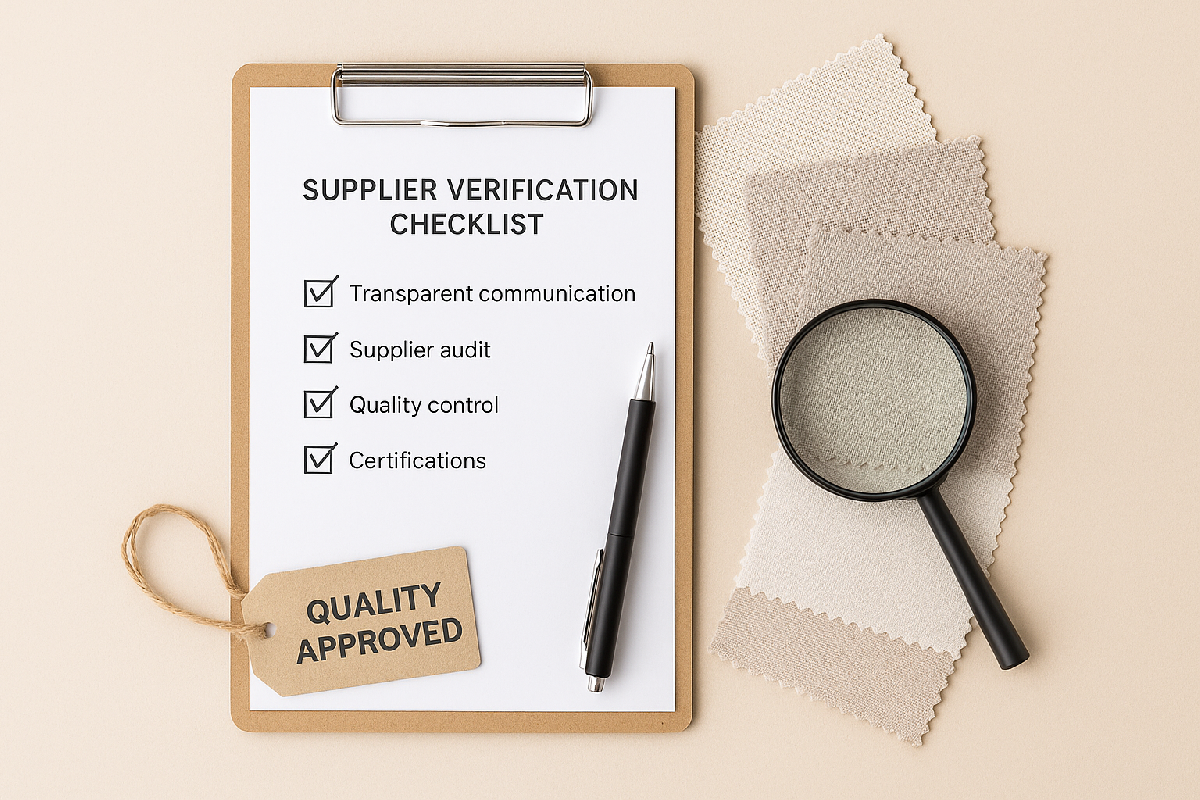
Choosing the right home textile supplier can make or break your sourcing strategy. A supplier may look perfect on paper—competitive pricing, fast replies, impressive product photos—but the real test lies in consistency, transparency, and long-term reliability.
In a global market where delays, hidden quality issues, and compliance gaps can damage your brand, importers must learn how to evaluate a supplier beyond just surface-level checks.
In this guide, you’ll learn exactly how to verify a reliable textile supplier using practical steps like supplier verification, ethical sourcing checks, certification reviews, and proven quality-control indicators. These methods reduce risk, strengthen your supply chain, and help you build long-term partnerships with genuine textile sourcing partners.
The right supplier doesn’t just deliver products — they safeguard your business. A trustworthy supplier is honest in every business dealing, transparent about capabilities, and committed to your long-term profitability rather than short-term gains. Instead of cutting corners or inflating margins, they actively work to give you high-quality goods at a reasonable and sustainable price.
A reliable home textile supplier focuses on repeat orders, not one-time transactions. They align their processes to ensure consistency in every batch, so you never have to stress about the quality of the next shipment. Their goal is to help you build a stable, low-risk supply chain — one where communication is clear, production is predictable, and quality is never a surprise. This is why choosing the right supplier early on makes all the difference in the long run.
genuine manufacturers from risky ones. These five signs are the strongest indicators of reliability in the home textile sourcing world:
1. Transparent and Consistent Communication
A reliable home textile supplier communicates clearly from day one — they give realistic delivery timelines, share production updates proactively, and explain any limitations upfront. They don’t dodge questions, avoid specifics, or hide behind vague promises. Transparency in communication reflects transparency in operations.
2. Strong and Verifiable Documentation
Credible suppliers never hesitate to share certifications, production licenses, quality test reports, or factory images. They understand that supplier verification is a standard part of global sourcing. If a supplier willingly opens their processes for review, it signals authenticity and confidence in their own standards.
3. Ethical Sourcing and Clean Manufacturing Practices
Trustworthy suppliers follow ethical sourcing principles — fair labor treatment, safe working environments, responsible waste management, and genuine material sourcing. These habits reflect long-term stability, not shortcuts. Ethical factories also tend to deliver more consistent quality because their processes are structured, not improvised.
4. Robust Quality Control Systems
Quality is never an accident. A dependable supplier uses documented QC steps at every stage — from yarn selection to weaving, dyeing, stitching, and packing. They share batch reports, fabric specs, GSM checks, and visual inspection results without hesitation. This system-driven approach ensures your next shipment always matches the previous one.
5. Clear, Honest, and Logical Pricing
Trustworthy suppliers don’t use pricing as a game. They explain cost structure clearly, justify raw material fluctuations, and avoid hidden charges. Their goal is a stable relationship, not squeezing extra margins from every order. Transparent pricing is one of the strongest signals of a partner-focused manufacturer.
Many of the problems importers face — poor quality, delayed shipments, sudden price changes — can be predicted early through a few clear warning signs. The first is vague or delayed communication. When a supplier struggles to give clear answers or takes too long to respond, it reflects internal disorganization that will later show up during production.
Another major red flag is hesitation to share documents like certifications, factory photos, or quality reports. Trustworthy suppliers treat transparency as normal; unreliable ones avoid it. Extremely low pricing is also a trap — it often means hidden compromises such as poor yarn quality, inconsistent GSM, or outsourced production. These suppliers either raise prices later or deliver goods that won’t pass inspection.
Finally, a lack of defined QC processes and no repeat clients are strong indicators that the supplier fails to deliver consistency. Good factories proudly show their systems and long-term customers. If a supplier can’t do either, they’re not worth your risk.
A supplier with a true long-term mindset doesn’t look at your order as a one-time gain — they see it as the start of a relationship worth nurturing. They act with honesty in every transaction, even when it’s inconvenient. Such suppliers do not inflate costs, hide issues, or make decisions that harm your profitability. Instead, they make choices that protect your margins because they understand that a financially strong buyer becomes a consistent buyer.
Long-term–oriented suppliers focus on creating value rather than extracting it. They proactively find ways to deliver high-quality goods at a reasonable and sustainable price. Whether it’s improving their processes, sourcing better raw materials, or giving you clarity on cost drivers, they work to ensure you get fairness without compromise. Their goal is not to win one order — it’s to build trust that leads to continuous business.
Most importantly, these suppliers prioritize repeatability. They build systems that ensure your future shipments are as reliable as your first one. Instead of you worrying about whether the next batch will cause problems, they take responsibility for consistency, communication, and transparency. This long-term outlook creates a supply chain where you don’t operate in fear — you operate with confidence.
ThreadLyne Global is a trusted hospitality linen supplier, delivering premium bed linen and towels worldwide. We stand for comfort, quality, transparency, and on-time supply for hotels, importers, and wholesalers.
ThreadLyne Global - Copyright . All rights reserved. | Proudly created by Green Hightech
ThreadLyne Global is a trusted hospitality linen supplier, delivering premium bed linen and towels worldwide. We stand for comfort, quality, transparency, and on-time supply for hotels, importers, and wholesalers.