Welcome to ThreadLyne Global

Welcome to ThreadLyne Global
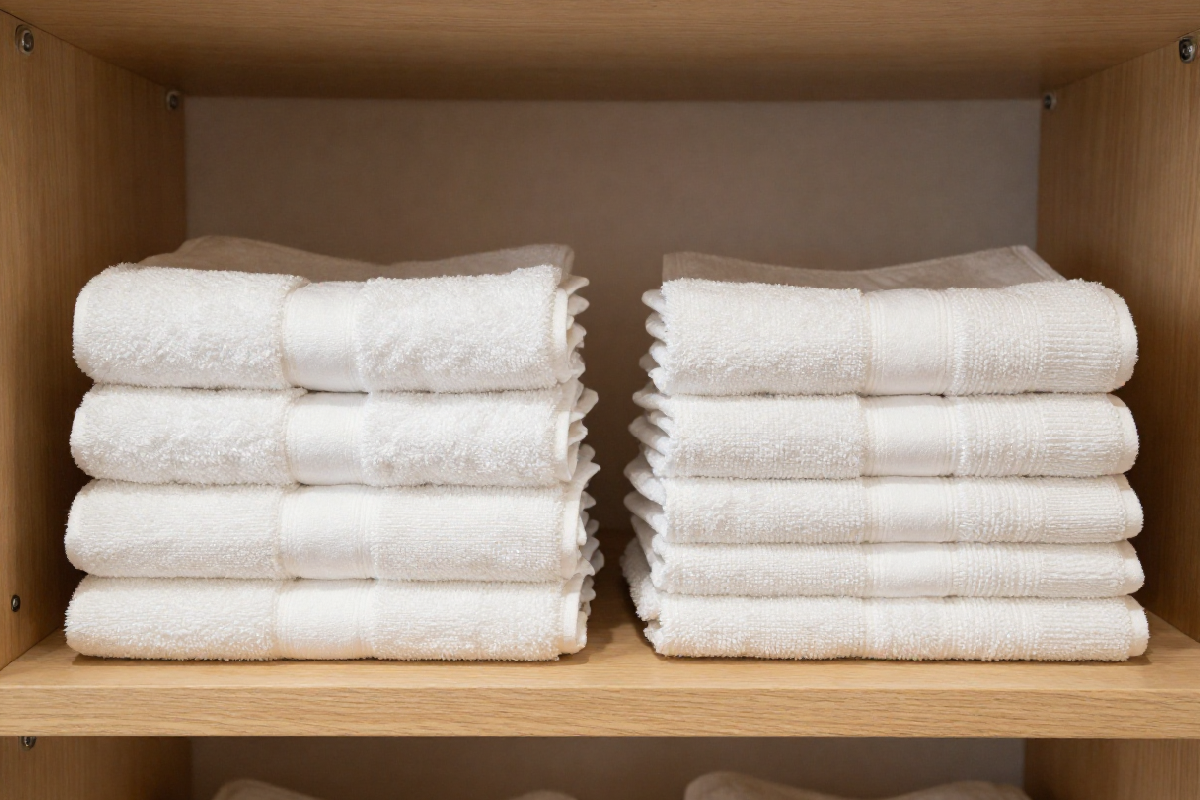
Having an in-house laundry can increase the operation budget of a hotel. Although outsourcing can reduce the control you might have on your linen assets. You might be wondering which one actually suits you. There is no simple answer to this. However, there are a few factors that can help you make an informed decision.
In this article, you will learn the different factors to consider while making the most important decision about your laundry operation. You will also be able to develop a decision framework that can be applied depending on the number of rooms you plan to have on your property.
Variable 1: The room count and daily linen load
The economics of an on-premises laundry only works if you have a decent volume of linens to be laundered every day. If your property uses a good amount of linen on a daily basis then you’re probably better off with an OPL.
Variable 2: Occupancy consistency
Seasonal hotels have different needs compared to year-round city properties. The seasonal property sees extreme occupancy levels whereas the city properties are at stable occupancy levels. It is easier to take a decision for properties with a stable occupancy level.
Variable 3: Turnaround time
What is your busiest check-out/check-in overlap day, and how many rooms turn over in under 4 hours?" If the answer is more than 30% of your inventory, outsourcing requires either a same-day service premium or a higher par investment. Both of these erode the cost advantage that makes outsourcing attractive in the first place. If that is the case, you need to budget for either a higher PAR level or a premium same-day outsourcing contract. If neither is viable, an OPL gives you full control over turnaround speed.
An example of these variables interacting to help form a decision is: An 80-room hotel with a stable 90% occupancy will need an On-premises Laundry more than a 120-room resort with 40% average occupancy.
As discussed in the above section, if your property uses up a decent amount of linen every day, it is time to invest in an On-premises Laundry. An industry benchmark of approximately 300-350 kgs of linen every day is probably a decent volume.
A room can use up around 2-3 kgs of linen per checkout. At that rate, 100-130 occupied rooms daily will probably be a good range for the OPL. More details in the table:
|
Daily Occupied Rooms |
Recommended Approach |
|
Under 60 |
Outsource (OPL capital cost is hard to justify) |
|
60-100 |
Borderline (model around your specific numbers) |
|
100-130 |
OPL is most cost effective |
|
130+ |
OPL almost always wins long-term |
Having an on-site spa can also increase your linen usage. If that is the case, factor in that as well
Most commercial washing machines are much harsher than the regular ones. They have a higher wash temperature, stronger chemical concentration, a higher mechanical action, and more aggressive drying process. This can actually reduce your linen lifespan. A few hotels have reported a 2-5% higher linen loss levels when using an outsourced laundry.
For example: A 100-room hotel with outsourced laundry may need to replace their bath towels in 11 vs the 14-15 months with an OPL. That translates to 2-3 more bulk orders per decade.
This also affects your inventory PAR levels. An on-premises Laundry can easily operate with a 3 PAR level, whereas for an outsourced laundry you might need a 4-5 PAR level. Read the PAR level Guide to understand how PAR levels affect operations and sourcing decisions.
Even with all this information, there is always a chance that your property might not find the perfect fit. There is a way to get the best of both systems. You can outsource part of your linen to a laundry and keep part in-house. For example: Outsource the laundering of sheets and keep the towels in-house. This allows proper care for the delicate towels and reduces your load as well.
For this to work, you can simply order a couple of commercial washer-dryer setups and train your housekeeping staff to operate it. This takes care of your towels and helps you reduce the cost as well. A hybrid model, if done correctly can help you save 20-30% of your annual linen budget.
This can also build supply chain resilience. Even if your outsourcing partner has a delivery delay, your towels are never affected. You can also opt for a linen hire model in case you don’t want this hassle at all. You can simply pay per use on all your linen items. Once used, you can easily return them to the linen hire partner for laundering.
That said, a hybrid model adds operational complexity, your housekeeping staff will need training, equipment will need regular maintenance, and you'll need dedicated space for the machines. It works best when you have a stable team and at least 60–80 occupied rooms daily to justify the setup.
The key takeaway isn’t the decision between in-house and outsourced laundering. It’s which combination works best for your room count, occupancy and space. The end goal is to create a linen management SOP that increases their lifespan and helps you save dollars over the long-term.
The right linen strategy is only as good as the supply behind it. If you want to make sure your property never runs short regardless of which model you choose, reach out to us for a quote.

ThreadLyne Global is a trusted hospitality linen supplier, delivering premium bed linen and towels worldwide. We stand for comfort, quality, transparency, and on-time supply for hotels, importers, and wholesalers.
ThreadLyne Global - Copyright . All rights reserved. | Proudly created by Green Hightech
ThreadLyne Global is a trusted hospitality linen supplier, delivering premium bed linen and towels worldwide. We stand for comfort, quality, transparency, and on-time supply for hotels, importers, and wholesalers.